What size power bank do I need for camping? The power bank size you need for camping depends on several factors, including the devices you plan to charge, the length of your trip, and how often you’ll use those devices. This article will help you determine your specific camping power needs and choose the right power bank capacity for camping. It will cover everything from calculating your energy usage to choosing the best power bank for tent camping and considering solar power bank camping options.
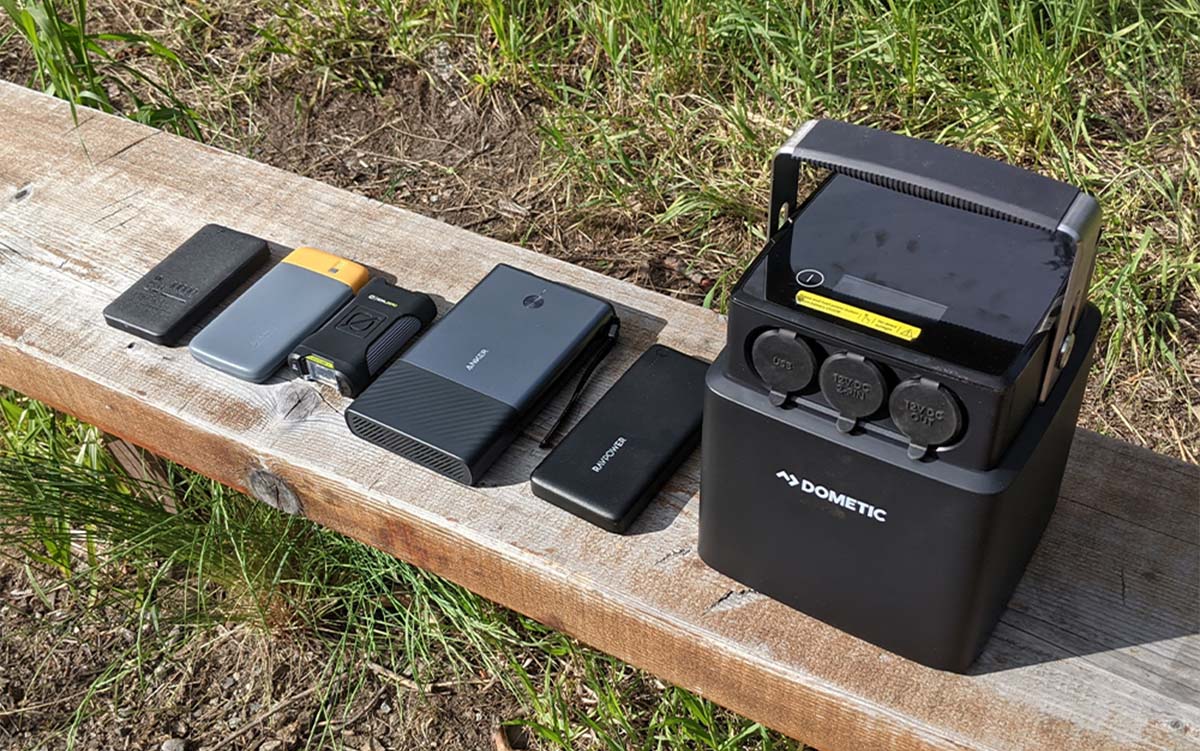
Image Source: www.outdoorlife.com
Determining Your Camping Power Needs
Before you buy a portable charger for outdoor trip, you need to figure out how much power you’ll actually use. This involves listing your devices, estimating their power consumption, and calculating your total long camping trip power requirements.
1. Inventory Your Devices
Make a list of every electronic device you plan to bring. Common items include:
- Smartphone
- Tablet
- Camera
- Headlamp
- GPS device
- E-reader
- Smartwatch
- Portable speaker
2. Find Each Device’s Battery Capacity
Look for the battery capacity, usually listed in milliampere-hours (mAh), printed on the device or in its specifications. If it’s listed in watt-hours (Wh), you can convert it to mAh using the following formula:
mAh = (Wh * 1000) / Voltage
Most USB devices operate at 5V. For example, if a device has a 10Wh battery:
mAh = (10 Wh * 1000) / 5V = 2000 mAh
3. Estimate Daily Usage
Estimate how often you’ll use each device daily and how much battery life you’ll consume. This is crucial for accurate planning. For example:
- Smartphone: Used for 2 hours daily, consuming 50% of its battery.
- Headlamp: Used for 1 hour daily, consuming 25% of its battery.
- Camera: Used for taking photos, consuming 30% of its battery.
4. Calculate Daily Power Consumption
Multiply each device’s battery capacity by its estimated daily usage percentage. This gives you the daily mAh consumption for each item.
| Device | Battery Capacity (mAh) | Daily Usage (%) | Daily Consumption (mAh) |
|---|---|---|---|
| Smartphone | 3000 | 50% | 1500 |
| Headlamp | 1000 | 25% | 250 |
| Camera | 2000 | 30% | 600 |
| Total | 2350 |
5. Determine Trip Length and Total Power Needs
Multiply your total daily power consumption by the number of days you’ll be camping. This provides your total power requirement for the trip.
For a 3-day trip, the total power needed would be:
2350 mAh/day * 3 days = 7050 mAh
Power Bank Capacity: What mAh Do You Need?
Once you know your total power needs, you can choose a power bank with sufficient mAh for camping power bank. However, keep in mind that power banks aren’t 100% efficient.
Accounting for Power Bank Efficiency
Power banks typically have an efficiency rating of 70-80%. This means you won’t get the full mAh advertised on the package. To compensate, increase your calculated power needs by 20-30%.
Using the previous example, a 7050 mAh requirement adjusted for 70% efficiency becomes:
7050 mAh / 0.7 = 10071 mAh
Therefore, you’d need a power bank with at least 10071 mAh to reliably power your devices for the 3-day trip. It’s always better to overestimate and choose a slightly larger power bank.
Choosing the Right Capacity
Here’s a general guide to help you choose the right power bank capacity:
- 5,000 – 10,000 mAh: Suitable for short trips (1-2 days) with minimal device usage, like a smartphone and headlamp.
- 10,000 – 20,000 mAh: Ideal for weekend trips (2-3 days) with moderate device usage, including smartphones, cameras, and tablets.
- 20,000 – 30,000 mAh: Good for longer trips (3-5 days) with heavy device usage or multiple devices to charge.
- 30,000+ mAh: Best for extended trips (5+ days) or situations where you need to power multiple devices frequently.
Types of Power Banks for Camping
Different types of power banks cater to various outdoor power solution needs.
Standard Power Banks
These are the most common type, offering a range of capacities and features. They are charged via USB and are suitable for most camping situations.
Pros:
- Wide range of capacities
- Affordable
- Easy to use
Cons:
- Require pre-charging before the trip
- No way to recharge in the wilderness (unless combined with solar charger)
Solar Power Banks
Solar power bank camping options use solar panels to recharge the battery. They are ideal for extended trips where access to electricity is limited.
Pros:
- Can be recharged using solar energy
- Environmentally friendly
Cons:
- Charging efficiency depends on sunlight availability
- Can be slow to charge fully via solar
- Often more expensive
Rugged Power Banks
These are designed to withstand harsh outdoor conditions, with features like water resistance, shock resistance, and dustproofing.
Pros:
- Durable and reliable
- Suitable for extreme environments
Cons:
- Can be heavier and bulkier
- Often more expensive
Power Stations
These are larger, high-capacity batteries with AC outlets, allowing you to power larger devices like laptops, portable fridges, and even small appliances. While not ideal for backpacking, they are great for car camping.
Pros:
- Can power AC devices
- High capacity
Cons:
- Heavy and bulky
- More expensive
Key Features to Consider When Choosing a Power Bank
Besides capacity, several other features can impact your portable charger for outdoor trip.
Output Ports
- USB-A: The standard USB port, compatible with most devices.
- USB-C: Newer, faster charging port that can also be used to charge the power bank itself.
- USB Power Delivery (PD): Allows for faster charging of compatible devices, such as laptops and tablets.
- AC Outlet: Found on power stations, allowing you to plug in standard wall-powered devices.
Input Ports
- Micro-USB: An older standard for charging power banks, slower than USB-C.
- USB-C: Increasingly common for charging power banks, offering faster charging speeds.
- Solar Input: Allows you to connect a solar panel to recharge the power bank.
Charging Speed
- Amperage (A): A higher amperage output allows for faster charging of your devices. Look for power banks with at least 2A output for smartphones and tablets.
- Wattage (W): Higher wattage output is needed for charging larger devices like laptops via USB-C PD.
Durability and Water Resistance
Look for power banks with an IP rating (Ingress Protection) for water and dust resistance. A higher IP rating means better protection. Rugged power banks are built to withstand drops and impacts.
Size and Weight
Consider the size and weight of the power bank, especially if you are power bank for backpacking. Lighter and more compact models are easier to carry.
Safety Features
Choose power banks with built-in safety features like overcharge protection, over-discharge protection, short-circuit protection, and temperature control.
Power Bank Recommendations for Different Camping Scenarios
Here are some power bank recommendations based on different camping scenarios:
Weekend Camping Trip (2-3 Days)
Devices: Smartphone, headlamp, camera
Recommended Capacity: 10,000 – 20,000 mAh
Features:
- Multiple USB ports
- Fast charging (2A or higher)
- Compact and lightweight
Example: Anker PowerCore 20100, INIU Portable Charger 20000mAh
Long Camping Trip (5+ Days)
Devices: Smartphone, tablet, camera, GPS device
Recommended Capacity: 20,000+ mAh (or multiple power banks)
Features:
- High capacity
- Multiple USB ports, including USB-C PD
- Rugged design
- Consider a solar power bank camping option to supplement charging
Example: Goal Zero Sherpa 100PD, Anker PowerCore III Elite 25600
Car Camping
Devices: Smartphone, tablet, laptop, portable fridge
Recommended Capacity: Power Station (200Wh+)
Features:
- AC outlet
- Multiple USB ports
- High capacity
- Consider charging devices while camping using car’s 12V outlet if needed
Example: Jackery Explorer 240, Goal Zero Yeti 400
Backpacking
Devices: Smartphone, headlamp, GPS watch
Recommended Capacity: 10,000-15,000 mAh
Features:
- Lightweight
- Compact size
- Durable
- Consider a power bank for backpacking with solar charging capabilities, but manage expectations.
Example: Anker PowerCore 10000, Mophie Powerstation PD
Tips for Maximizing Power Bank Life While Camping
- Turn off devices when not in use: This conserves battery power and reduces the need for frequent charging.
- Enable power-saving mode: Most devices have a power-saving mode that reduces background activity and screen brightness.
- Avoid extreme temperatures: Extreme heat or cold can negatively impact battery performance. Keep your power bank and devices protected.
- Charge strategically: Charge your devices during the day when you have access to sunlight (if using a solar power bank) or when you’re not actively using them.
- Use efficient charging cables: Use high-quality charging cables to ensure efficient power transfer.
- Store power bank properly: When not in use, store your power bank in a cool, dry place.
- Don’t fully discharge your power bank: Lithium-ion batteries perform best when kept between 20-80% charge.
Alternative Power Solutions for Camping
While power banks are a convenient solution, here are other options for charging devices while camping:
- Solar Chargers: Portable solar panels can directly charge your devices or power banks.
- Hand-Crank Generators: These generate power by manually cranking a handle. They are useful in emergencies but require significant effort.
- Car Chargers: If car camping, you can use a car charger to power your devices.
- Campgrounds with Power Hookups: Some campgrounds offer electrical hookups, allowing you to plug in your devices directly.
Factors Affecting Power Bank Performance
Several factors can affect how well your power bank performs:
- Temperature: Extreme temperatures can reduce battery capacity and charging efficiency.
- Altitude: Higher altitudes can affect battery performance due to lower air pressure.
- Charging Cables: Low-quality or damaged charging cables can reduce charging speed and efficiency.
- Device Charging Habits: Constantly charging and discharging your devices can shorten battery life.
- Power Bank Age: Over time, power banks lose capacity and efficiency.
FAQ About Power Banks for Camping
Q: Can I bring a power bank on a plane?
A: Yes, but there are restrictions. Most airlines allow power banks with a capacity of up to 100Wh (approximately 27,000 mAh) in carry-on luggage. Power banks between 100Wh and 160Wh require airline approval, and those exceeding 160Wh are generally prohibited. Check with your airline for specific regulations.
Q: What is the best way to charge a power bank while camping?
A: The best way depends on your resources. If you have access to electricity, you can use a wall charger. If not, a solar charger is a good option. You can also use a car charger if you’re car camping.
Q: How long does it take to charge a power bank?
A: Charging time depends on the power bank’s capacity and the charging source. A smaller power bank (5,000 mAh) can charge in a few hours, while a larger one (20,000 mAh+) can take 6-12 hours. Using a faster charger (USB-C PD) can significantly reduce charging time.
Q: What do I do with my old power bank?
A: Do not throw it in the trash. Recycle your old power bank at an electronics recycling center or a battery recycling program.
Q: How do I care for my power bank to extend its lifespan?
A: Avoid extreme temperatures, store it in a cool, dry place when not in use, and try to keep the battery charge between 20-80%. Don’t let it sit fully discharged for extended periods.
By carefully considering your camping power needs, choosing the right power bank capacity for camping, and following these tips, you can ensure that your devices stay powered up throughout your camping adventures. Happy camping!

My name is Gareth Lewis, and I’m the voice behind CampingGuider.com.. I created this space to share my passion for camping and the great outdoors. With years of experience and countless adventures under my belt, I aim to inspire and guide fellow enthusiasts. Whether you’re a seasoned camper or a curious beginner, my goal is to provide you with practical tips, honest reviews, and insights to help you make the most out of your outdoor escapades. Join me on this journey, and let’s explore the beauty of nature together!